




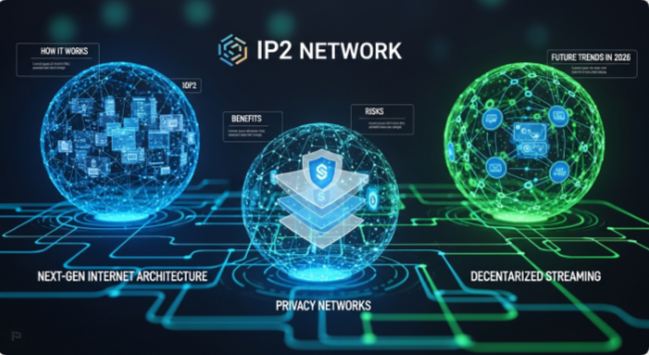
It is very likely that you have been looking for something like “IP2 Network,” “IP2 meaning,” or even “what does IP2 Network do,” only to find a variety of definitions that are somehow contradictory. You see, the term “IP2 Network” is not consistent in its definition, as it is more like a term that is varied in its use in several fields, particularly in the context of internet networks, privacy networks, and even internet communities.
Here is a breakdown of all the important definitions of IP2 Network, how they work, and why the term is being highlighted in 2025-2026 internet trends.
2. Why the Term Is Confusing : ip2 network
Most technical terms have specific definitions — but IP2 Network evolved organically, making it hard to pin down:
-
It’s not an official IEEE/RFC standard like IPv4 or IPv6.
-
The term is sometimes used interchangeably with unrelated technologies.
-
Different industries have adopted “IP2” to mean different concepts.
That ambiguity leads to confusion (and heavy web traffic from people asking “Is this safe?” or “What does IP2 actually refer to?”).
As a result, mainstream search engines often return mixed content when you look up IP2 Network — anything from decentralized internet models to anonymous networks to streaming movements.
3. IP2 Network as Next‑Generation Internet Architecture
3.1. Overview
Within the realm of network engineering, there exists an advanced understanding of “IP2 Network” that embodies the concept of the ‘modern rethink’ of traditional internet infrastructure, taking into consideration the shortcomings of IPv4 and IPv6, whereby smart technology plays a significant role in its implementation.
3.2. What Problems It Addresses
Traditional networking protocols like IPv4 and IPv6 handle packet forwarding statically — they do not adapt in real time to changing network demands. In contrast, a conceptual IP2 Network aims to:
-
Reduce latency and congestion automatically
-
Improve scalability for huge IoT and 5G/6G ecosystems
-
Build security into the protocol layer, not as an add‑on
-
Support hybrid environments and legacy systems
This model is not yet universally standardized, but the conceptual framework shows where future networks may go.
3.3. Core Components
A next‑gen IP2 Network includes:
✔ AI‑assisted routing: Routes packets dynamically based on current traffic conditions.
✔ Decentralized nodes: Data isn’t reliant on central servers, reducing single points of failure.
✔ Enhancement layers: Built‑in encryption, protocol abstraction, and predictive analytics.
✔ Hybrid IP compatibility: Works with IPv4/IPv6 ecosystems without major configuration issues.
3.4. Real‑World Applications
Although not a formal standard yet, organizations are exploring IP2‑like ideas in:
-
Smart city networks
-
Real‑time autonomous systems
-
Cloud networking with dynamic traffic orchestration
-
IoT device ecosystems needing adaptive performance
This vision positions IP2 beyond traditional routing — toward intelligent, self‑adjusting infrastructures.
4. IP2 Network and ISP/IP Intelligence Services
Another business usage of the term IP2 Network refers to database services that convert IP addresses into contextual data:
4.1. What This Means
Some companies (often in cybersecurity or geolocation) market IP data services as IP2 — meaning IP Address to “Data.” Such networks map:
-
Location (country, region, city)
-
ISP/organization
-
VPN/proxy detection
-
Connection type and risk score
This usage is not a networking protocol, but rather a data layer that helps businesses understand where traffic comes from and how to manage it.
4.2. Typical Industry Uses
✔ Fraud detection systems
✔ Geoblocking services for content licensing
✔ Targeted advertising platforms
✔ User‑risk scoring engines
Such systems are critical for operations that rely on accurate IP metadata.
5. IP2 Network as a Decentralized or Anonymous Network (I2P Variant)
5.1. I2P vs IP2
One of the strongest associations with IP2 Network comes from discussions around I2P (Invisible Internet Project®), an anonymous overlay network designed for privacy and censorship resistance. Technically, I2P predates recent IP2 discussions and has a well‑defined architecture.
Unlike VPNs or even Tor, I2P:
-
Uses “garlic routing” to encrypt bundled traffic
-
Operates as a peer‑to‑peer decentralized network
-
Protects identities at the protocol level
-
Avoids centralized control systems
Some community content incorrectly labels these systems as “IP2,” likely due to the similarity in acronyms, but privacy experts often distinguish I2P as its own ecosystem.
5.2. Features of This Model
✔ End‑to‑end encryption by default
✔ No central servers or points of control
✔ Censorship resistance by design
✔ Ideal for secure messaging and anonymous content sharing
Because of the strong privacy angle, comparisons to VPNs and Tor are common topics in tech forums.
6. IP2 Network in Streaming & Content Communities
6.1. Streaming Interpretation
Additionally, in the digital culture and creator ecosystem, the term IP2 Network is synonymous with decentralized streaming networks, particularly decentralized ecosystems featuring independent IRL (in real life) content creators on mainstream platforms.
This arose because of the communities formed by unfiltered and unfettered live and interactive video streaming experiences that may aggregate many streaming services at once.
6.2. Key Traits of This Streaming IP2 Network
-
Content is user‑generated and unfiltered.
-
There is no single platform owner controlling rules.
-
Streamers often monetize independently (donations, crypto, memberships).
-
Discovery happens via community indexes and forums.
Unlike traditional streaming sites with built‑in content policies, this network style is communal and self‑organizing.
7. Use Cases: Who Uses IP2 Networks?
7.1. Network Engineers & IT Infrastructure Teams
Engineering groups exploring advanced routing models can use IP2‑style concepts to prototype future networks that:
-
Optimize data paths in real time
-
Self‑heal during outages
-
Scale effectively with IoT devices
7.2. Cybersecurity & Privacy Enthusiasts
Technologies like I2P (often conflated with “IP2 Network”) attract users who:
✔ Value anonymity
✔ Seek uncensored forums or platforms
✔ Want decentralized independent hosting
This group spans privacy advocates and developers.
7.3. Streaming Creators & Online Communities
Independent content creators sometimes operate within IP2 Network ecosystems, using cross‑platform directories to connect with audiences — often outside centralized algorithms or moderation.
8. Core Benefits Across All Interpretations
Across its varied meanings, the IP2 Network concept shares several recurring advantages:
🔹 Privacy & Security
Modern interpretations (especially privacy overlays) enhance protection against surveillance.
🔹 Decentralization
Whether networking architecture, privacy networks, or streaming communities, decentralization is central to IP2 ideologies.
🔹 Adaptability & Performance
AI‑driven traffic routing can automatically adjust to changing conditions and reduce congestion.
🔹 Content Freedom & Creator Control
In streaming interpretations, creators have more control over how and what they broadcast.
9. Risks, Challenges & Common Misconceptions
Despite its appeal, the term and technologies tied to IP2 carry limitations:
⚠ Lack of Standardization
No global body governs the meaning or implementation of IP2 Networks — leading to confusion and inconsistent usage.
⚠ Security Risks if Misused
Privacy platforms like I2P are powerful but can be used for illegal activities if misapplied. Users must comply with laws.
⚠ Content Moderation Challenges
Decentralized streaming can lead to toxic or harmful behavior without oversight.
⚠ Technical Barriers
Implementations involving AI routing and hybrid protocols require sophisticated infrastructure and expertise.
10. Future of IP2 Networks: Trends & Predictions
Looking ahead, IP2 concepts — especially next‑generation networking models — could influence:
-
Edge computing and 6G connectivity
-
Secure autonomous system communication
-
Decentralized web services
-
Hybrid corporate networking platforms
There’s increasing interest in building networks that aren’t just pipes for data but intelligent systems capable of real‑time optimization.
11. Conclusion: ip2 network
The term IP2 Network is not simple — but that’s also what makes it powerful.
Whether as a next‑generation protocol, a privacy ecosystem like I2P, or a decentralized streaming community, IP2 represents broader themes shaping the internet:
🔹 Control over personal data
🔹 Freedom from centralized gatekeepers
🔹 A future where networks adapt intelligently
Understanding the context is key. If someone mentions “IP2 Network,” ask which one they mean: architecture, privacy, or community.
12. Frequently Asked Questions ip2 network
Q: Is IP2 Network the same as the Internet?
A: No. It refers to several different concepts related to networking, privacy, or streaming — not the internet itself.
Q: Can IP2 Networks improve online privacy?
A: Yes, especially in privacy‑oriented interpretations like I2P, which encrypts and anonymizes connections.
Q: Are IP2 Networks legal?
A: Yes, in most places, but legality depends on how the technology is used.
Q: Do mainstream companies use IP2 Networks?
A: Some research groups and engineers explore IP2‑style concepts for infrastructure, but it’s not yet mainstream.
Q: Is IP2 Network safe for beginners?
A: Safety depends on use — meaning privacy implementations require careful setup and understanding of risks.